Carbohydrates & Sugar
Carbohydrates are one of the most misunderstood food groups - they're not all bad, but not all equal either. Learn how to tell simple carbs from complex ones, why fibre and starch behave so differently in your body, and how to spot added sugars hiding behind dozens of names on an ingredients list.
Carbohydrates have had a complicated reputation - low-carb diets, sugar bans, "carbs are bad" headlines. The truth is more nuanced and far more useful. The difference between a potato and a doughnut matters enormously, even though both contain carbohydrate.
#Simple vs Complex Carbs
Carbohydrates are not a monolith. The distinction that matters is how much fibre and starch a carb contains - and how quickly it raises blood sugar.
What carbs are made of
| Component | Digestion speed | Effect |
|---|---|---|
| Sugars | Fast | Quick energy spike then drop |
| Starch | Medium | Moderate glucose release |
| Fibre | Not digested | Slows absorption, feeds gut bacteria |
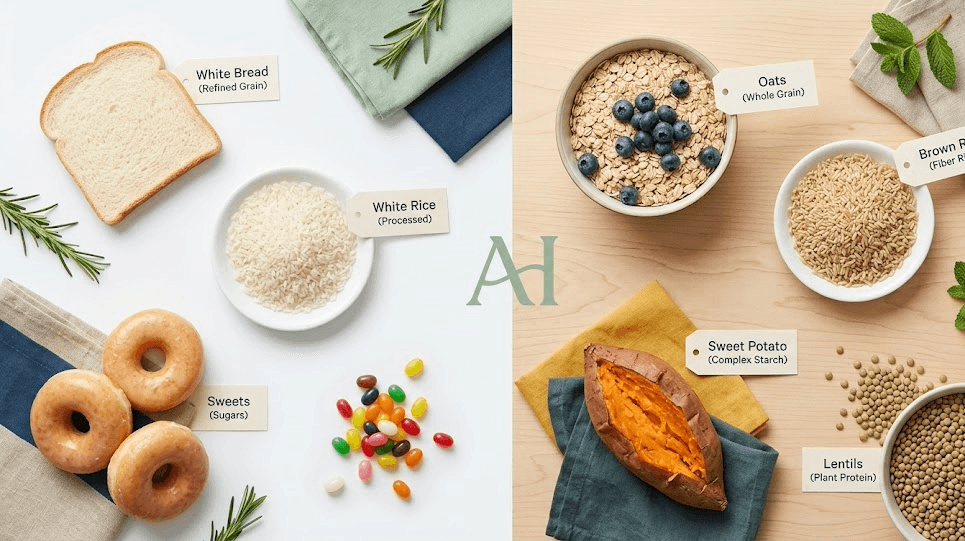
Simple carbs = mostly sugars with little fibre (white bread, fruit juice, sweets, pastries).
Complex carbs = starch + fibre (oats, brown rice, sweet potato, legumes, most vegetables).
Why it matters
Simple carbs digest quickly - useful around intense exercise, but they cause faster blood sugar spikes and leave you hungry again sooner. Complex carbs digest more slowly, providing steadier energy and better satiety.
It's about context, not elimination
Even "simple" carbs become less impactful when eaten alongside protein, fat, or fibre. A meal's composition matters as much as the carb source itself.
Easy swaps
- White rice → brown rice or quinoa
- White bread → wholegrain or rye
- Sugary cereal → oats with fruit
- Fruit juice → whole fruit (adds back the fibre)
#Added vs Natural Sugars
Not all sugar in your diet is equivalent. The sugar in a whole orange comes packaged with fibre, water, and micronutrients; the sugar in a flavoured yoghurt or granola bar is typically added with little nutritional benefit.
The key distinction
| Type | Where it comes from | How the body handles it |
|---|---|---|
| Natural sugar | Whole fruit, vegetables, plain dairy | Slower absorption due to fibre/water matrix |
| Added sugar | Added during manufacturing | Faster absorption, no accompanying nutrients |
Added sugar hides behind many names
Ingredient lists use over 50 names for added sugar. Look for any word ending in -ose (sucrose, dextrose, maltose, fructose) or containing syrup (high-fructose corn syrup, rice syrup, malt syrup), as well as fruit juice concentrate, cane juice, and invert sugar. The earlier these appear in the list, the more is present.
How much is too much?
- WHO guideline: less than 10% of daily calories from added sugar (~50g / 12 tsp on a 2,000 kcal diet)
- Ideal target: under 5% (~25g / 6 tsp)
- For reference: one can of cola contains around 35g of added sugar
Biggest hidden sources
Pasta sauces, ketchup, flavoured yoghurts, breakfast cereals, granola bars, fruit juices, and flavoured coffee drinks are among the most common sources people don't realise are high in added sugar.
Practical approach
- Buy plain yoghurt and add your own fruit
- Check labels on sauces, dressings, and cereals before buying
- Whole fruit is fine - the fibre changes how the sugar is absorbed
- Reserve sweetened treats for intentional choices rather than habitual ones
Enjoyed this guide? Share it with others.
More from the blog
Continue your learning journey with these guides.