Metabolic & Heart Health
Three nutrition topics that matter most for long-term metabolic and cardiovascular health: understanding your cholesterol numbers (including the lesser-known Lp(a)), using the glycaemic index to manage blood sugar if you're at risk of Type 2 diabetes, and flattening the energy spikes and crashes that drive afternoon slumps and cravings. This content is educational - for personalised guidance, work with your GP or dietitian.
Some of the most important nutrition decisions for long-term health relate not to day-to-day energy, but to the underlying metabolic processes that determine cardiovascular risk, blood sugar regulation, and sustained energy over the course of a day. This post covers three areas where nutrition has a clear, evidence-backed role.
A note on this content: this guide is educational. For personalised targets and management - especially if you have a diagnosis or are on medication - please work with your GP or a registered dietitian.
#Cholesterol & Lp(a)
Cholesterol is not inherently bad - your body produces it and needs it for cell function and hormone production. What matters is the balance of types and whether additional risk markers like Lp(a) are elevated.
The key lipid markers
| Marker | Role | Direction you want |
|---|---|---|
| LDL ('bad') | Carries cholesterol to artery walls | Lower |
| HDL ('good') | Removes cholesterol from arteries | Higher |
| Triglycerides | Blood fats; elevated by refined carbs/alcohol | Lower |
| Lp(a) | Genetic LDL variant; independent risk factor | Know your number |
What is Lp(a)?
Lipoprotein(a) is a genetically determined variant of LDL that is largely unaffected by diet. Around 20% of people have elevated Lp(a) and most are unaware. It's a meaningful independent cardiovascular risk factor - ask your GP for a one-time test.
What diet can do
- Reduce saturated fat → lowers LDL
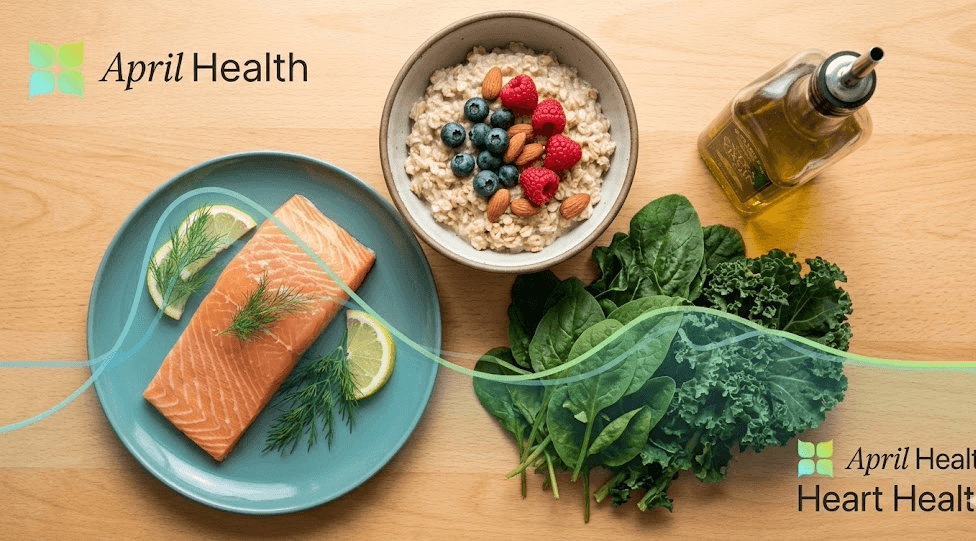
- Add soluble fibre (oats, legumes, psyllium) → lowers LDL
- More unsaturated fats (olive oil, oily fish, nuts) → raises HDL
- Cut refined carbs and alcohol → lowers triglycerides
What diet can't do
Diet has minimal impact on Lp(a). If elevated, medication (statins, PCSK9 inhibitors) and lifestyle factors (exercise, not smoking) are the primary levers - which is why knowing your number matters.
#Glycaemic Index & Type 2 Diabetes Risk
The glycaemic index (GI) ranks carbohydrate-containing foods by how quickly they raise blood glucose, relative to pure glucose (scored 100).
GI bands
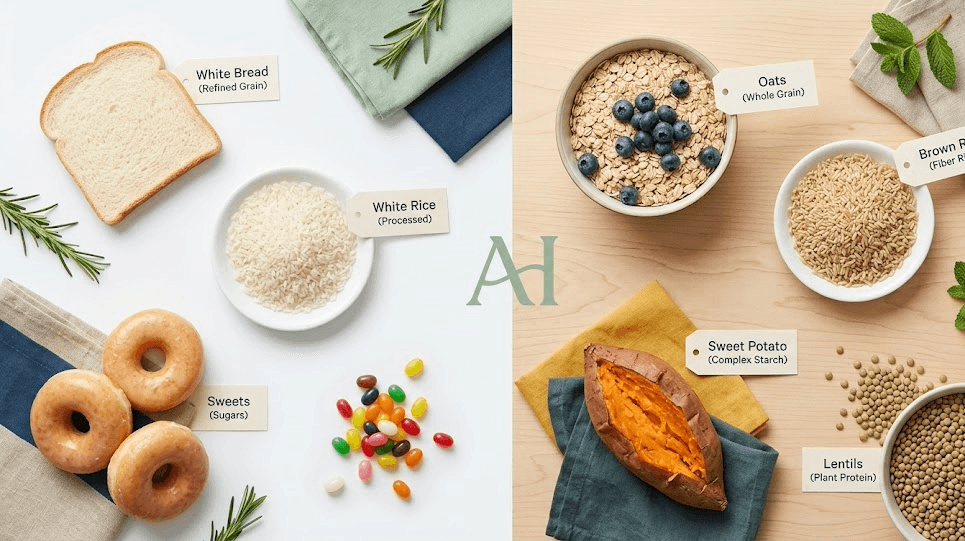
- High GI (>70): fast rise - white bread, white rice, cornflakes, watermelon
- Medium GI (55-70): moderate - oats, brown rice, ripe banana, wholemeal bread
- Low GI (<55): slow - lentils, most vegetables, pasta (al dente), sweet potato
GI vs Glycaemic Load (GL)
GI doesn't account for portion size. Glycaemic Load (GL) does:
GL = GI × grams of carbohydrate ÷ 100
Watermelon has a high GI (72) but a low GL - because a typical serving contains very little carbohydrate. This is why GL is more practically useful than GI alone.
Meal composition matters most
Adding protein, fat, or fibre to any meal slows how quickly carbs are absorbed - even high-GI carbs. White rice alone causes a fast blood sugar spike; white rice eaten as part of a mixed meal with protein and vegetables raises blood sugar much more gradually.
Practical low-GI swaps
- White bread → wholegrain or rye bread
- White rice → basmati, brown rice, or lentils
- Instant oats → rolled or steel-cut oats
- Baked potato → sweet potato or new potatoes (cooled cooked potato has a lower GI)
#Avoiding Energy Spikes & Crashes
The post-lunch fog and mid-afternoon slump are often the result of a blood glucose spike followed by a rapid drop - a cycle driven primarily by meal composition and eating order.
The mechanism
- You eat refined carbohydrates or sugar
- Blood glucose rises quickly
- Insulin spikes to bring glucose back down
- Glucose overshoots - dropping below baseline
- Result: fatigue, brain fog, renewed hunger and cravings
The faster the rise, the harder the fall.
Eat in a different order
Research shows that eating in this sequence at the same meal significantly flattens the post-meal glucose curve:
- Vegetables and salad first
- Protein and fat next
- Carbohydrates last
Same meal. Same calories. Meaningfully lower glucose spike.
Other evidence-backed levers
- Add protein or fat to any carb-heavy meal - both slow gastric emptying and glucose absorption
- Choose whole fruit over juice - the fibre matrix slows glucose release
- A 10-minute walk after eating lowers post-meal blood glucose measurably
- Avoid eating refined carbs alone as a snack (e.g. crackers or a biscuit without protein)
The goal: steady, not flat
Some rise in blood glucose after eating is completely normal and expected. The goal is avoiding the rollercoaster of large spikes and large crashes - which is what drives energy swings, afternoon slumps, and between-meal cravings.
Enjoyed this guide? Share it with others.
More from the blog
Continue your learning journey with these guides.